Human-Centered UAV Control System
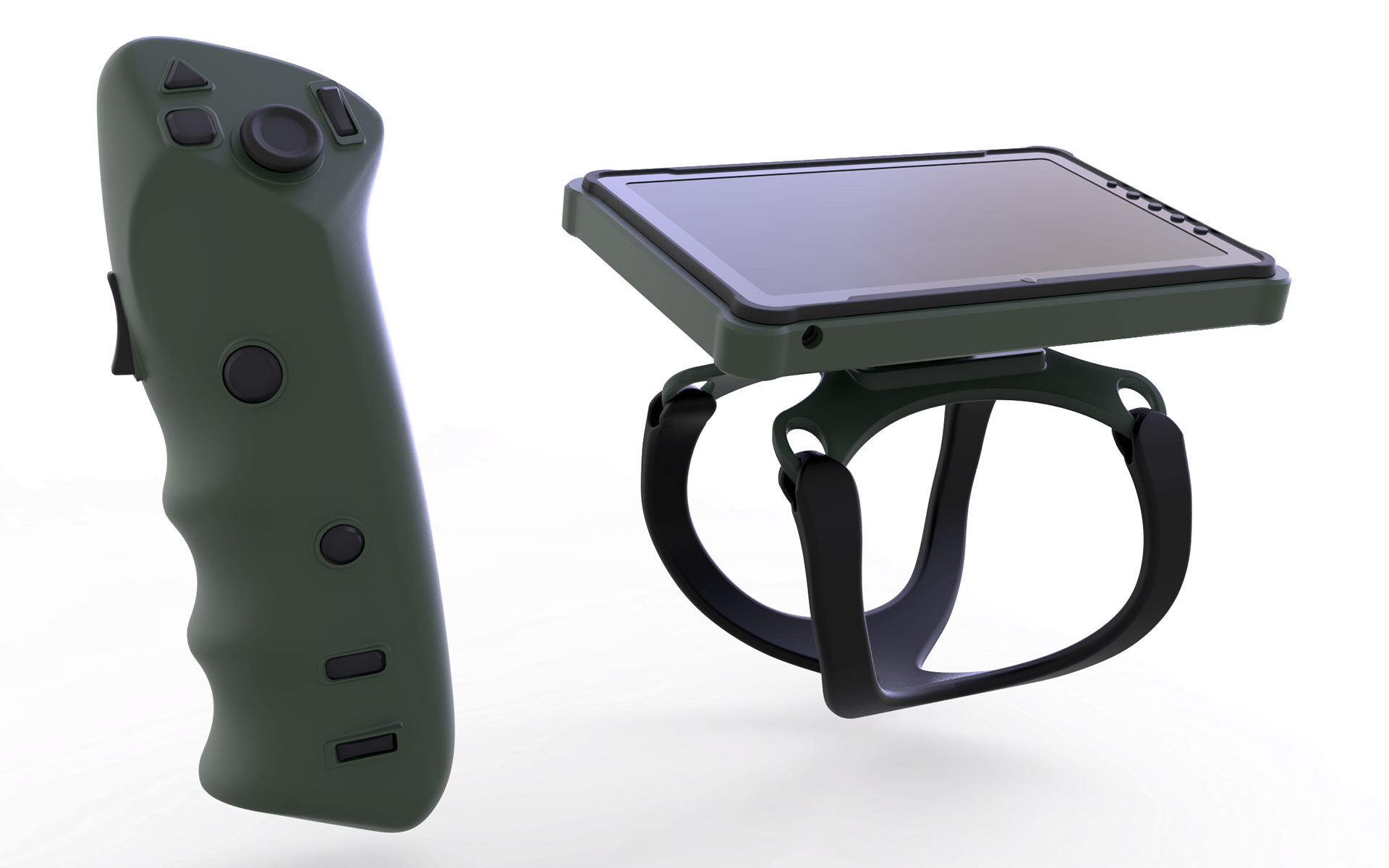
Project Overview
Traditional military UAV control systems often require bulky controllers and separate displays that limit operator mobility and divide attention.
This concept explores a wearable, one-handed UAV control system that combines an ergonomic controller with a forearm-mounted display, allowing operators to maintain mobility while keeping mission-critical information within view.
The design focuses on human factors, anthropometric sizing, intuitive control placement, and iterative physical prototyping to improve comfort, reduce fatigue, and support faster decision-making during extended missions.
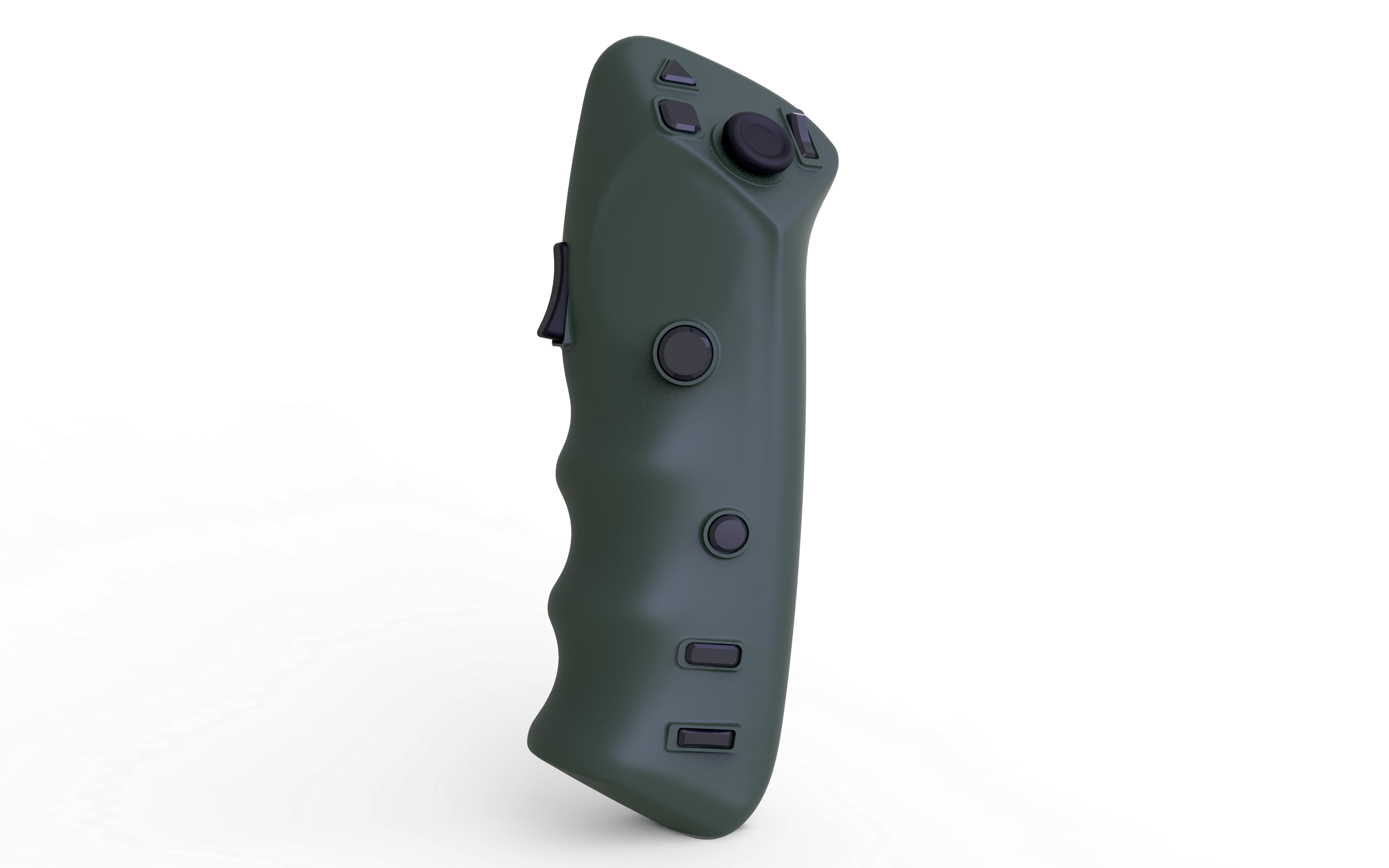
Full-Scale Final Prototype
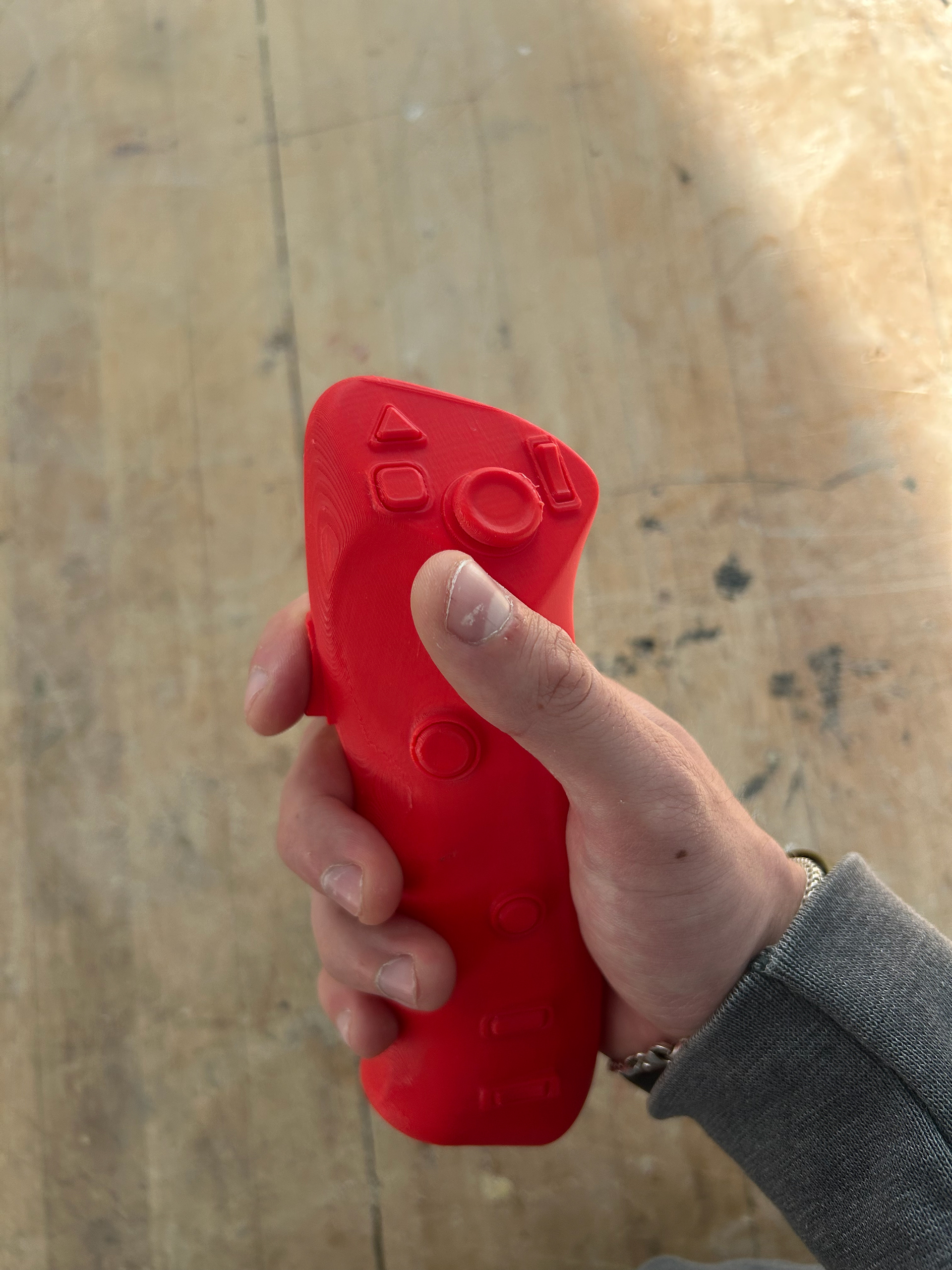
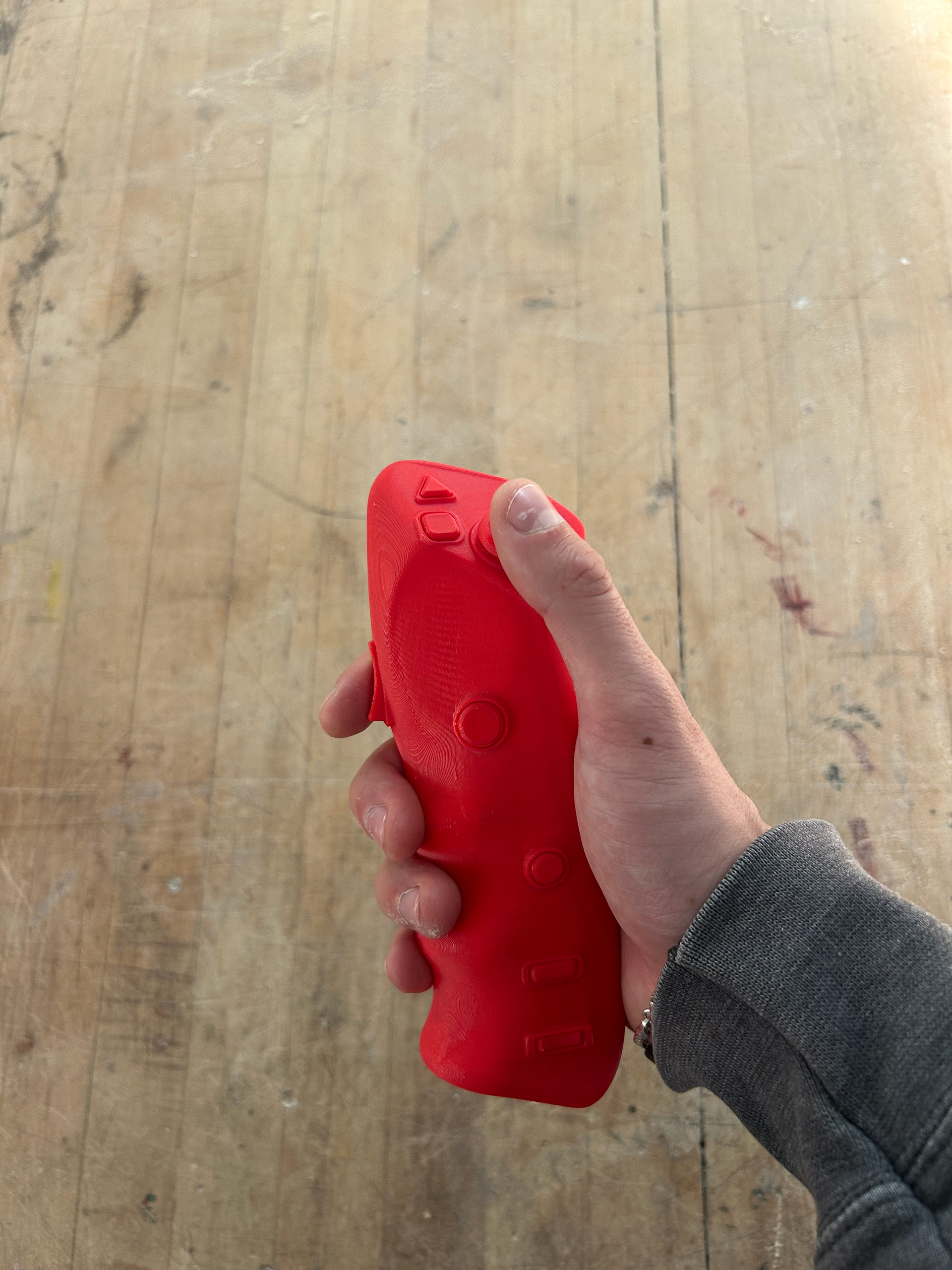
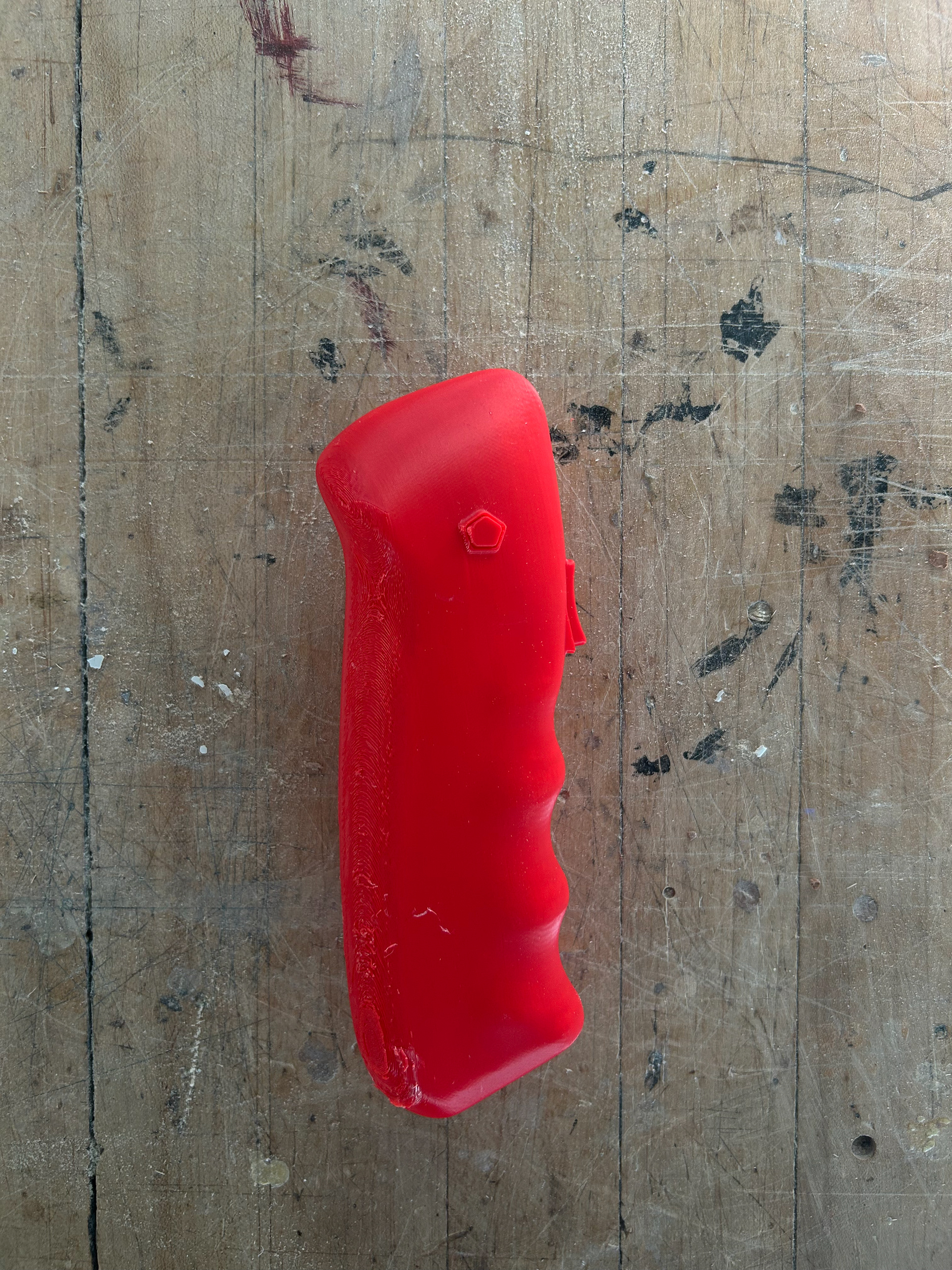
The final full-scale prototype was used to evaluate grip comfort, finger placement, and control accessibility. Multiple views showcase the finalized geometry developed through earlier foam and clay iterations.
Operational Scenario
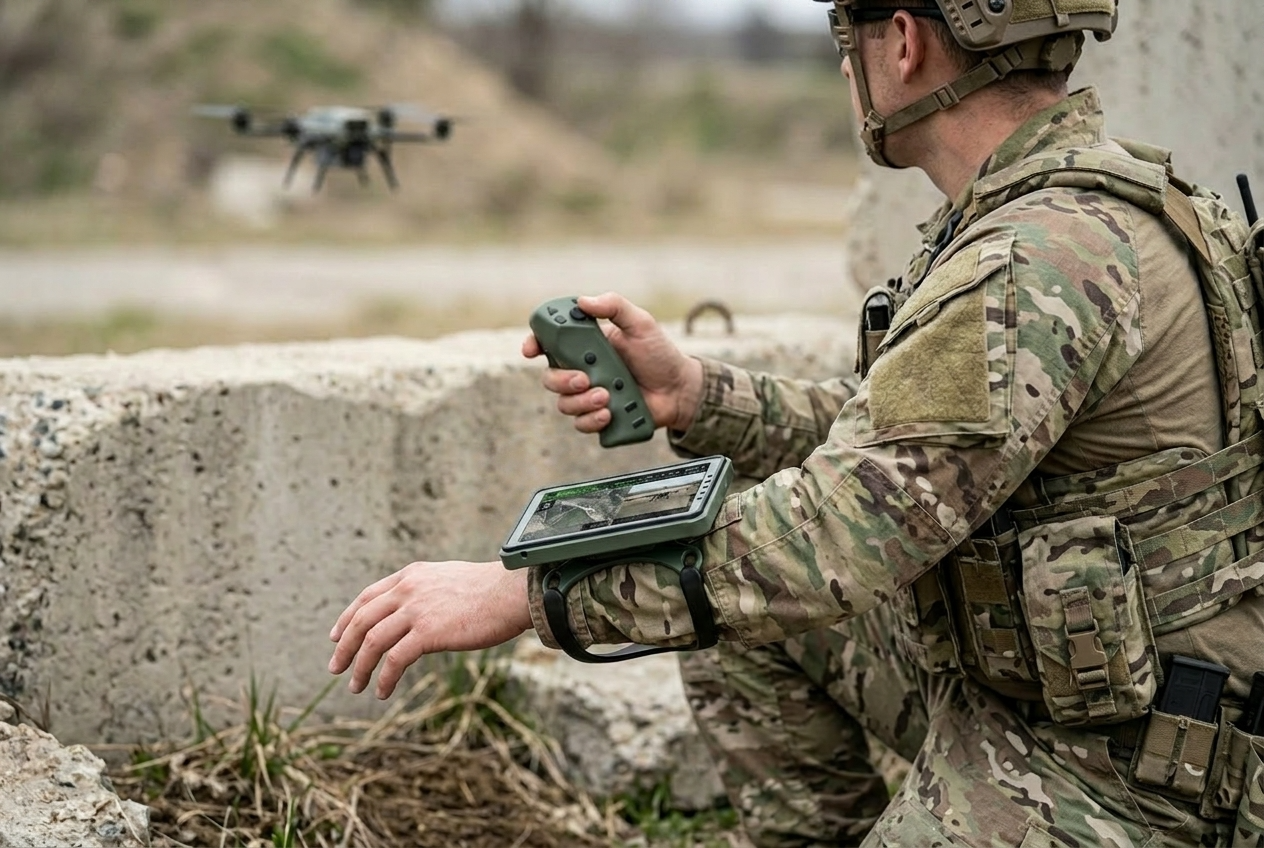
The wearable system enables UAV operation while allowing the operator to remain mobile, maintain situational awareness, and interact with surrounding equipment or teammates without setting down a conventional controller.
The forearm-mounted display reduces repeated head and hand movement by positioning mission information directly within the operator's natural viewing angle.
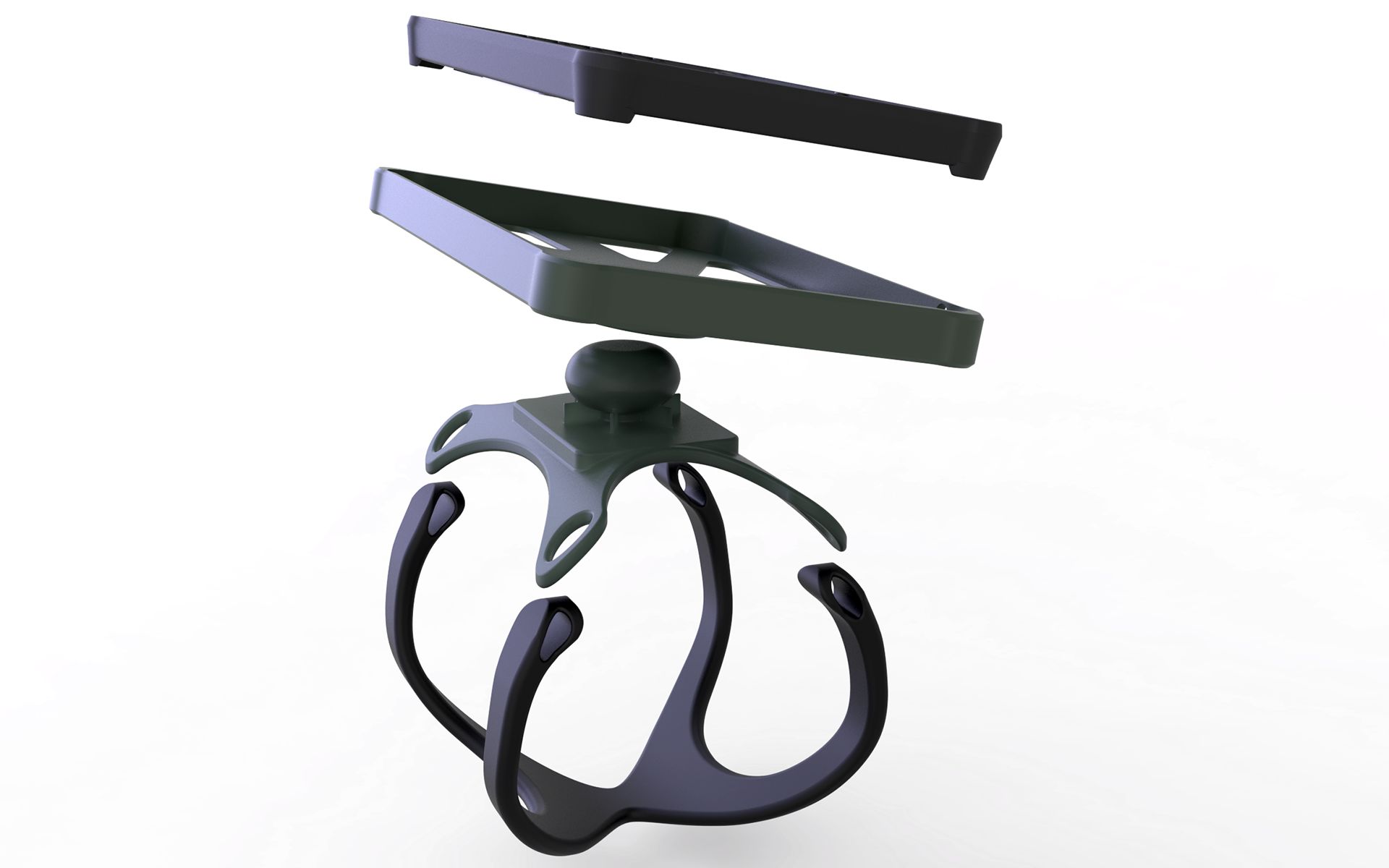
Modular Wearable Display
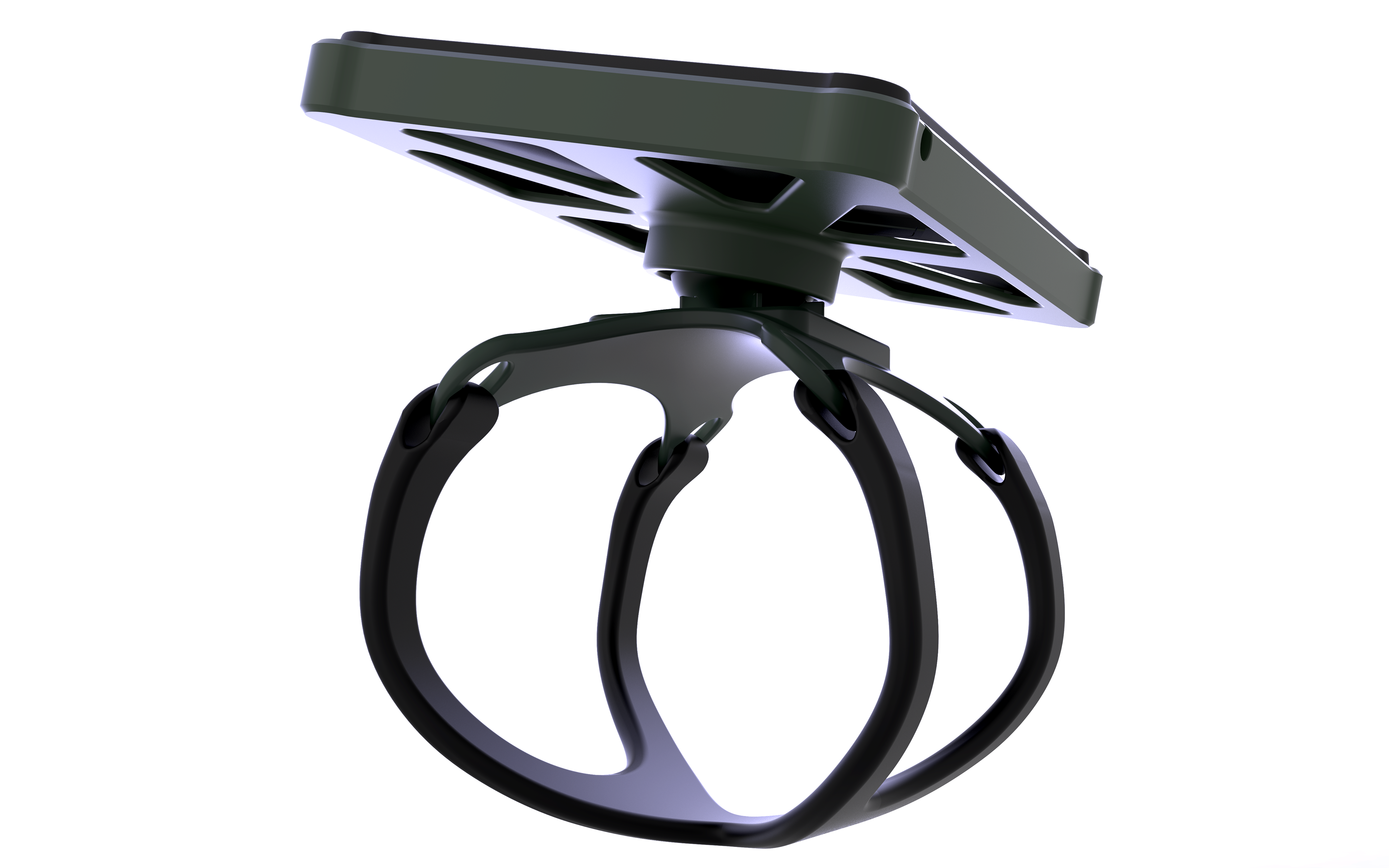
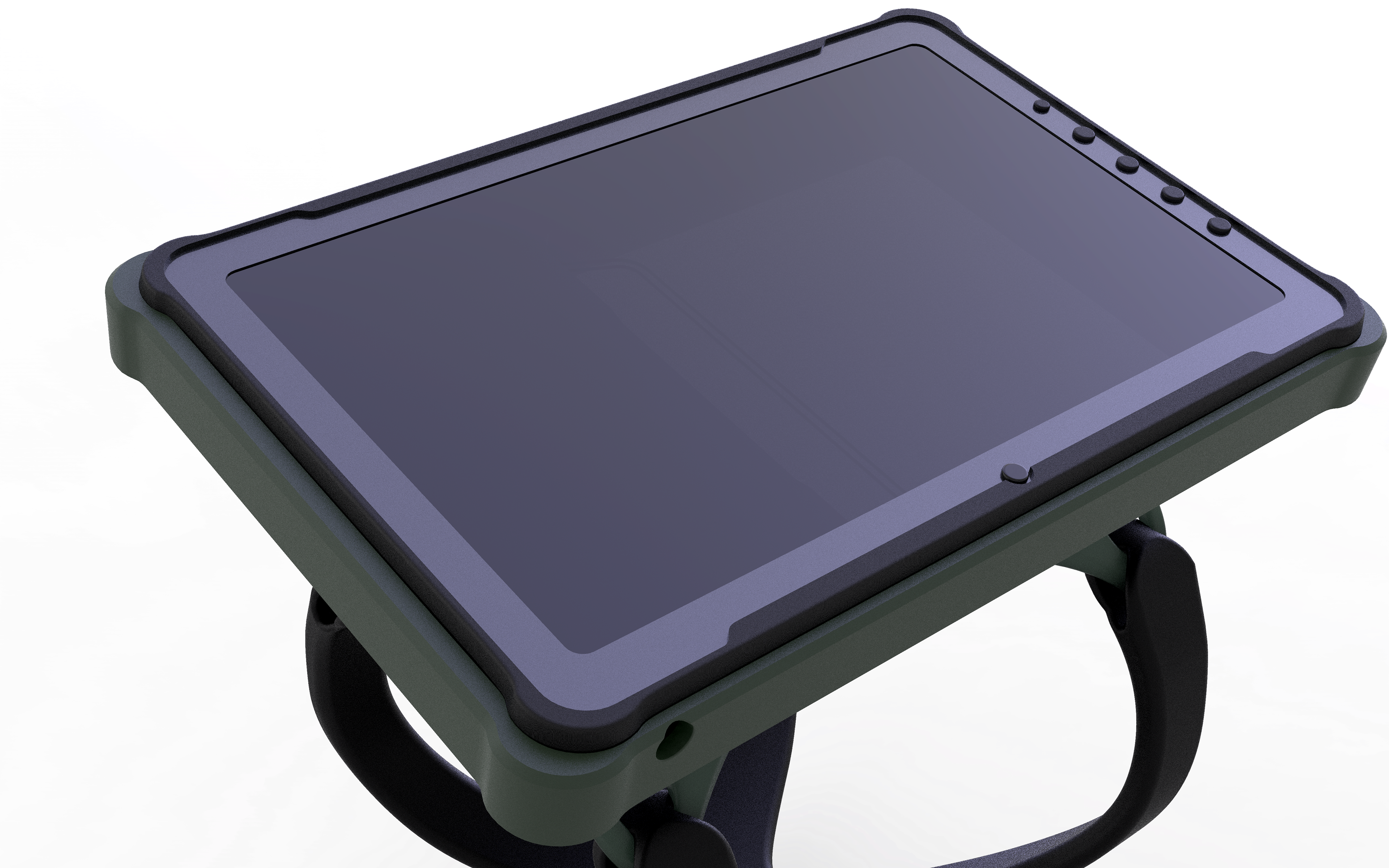
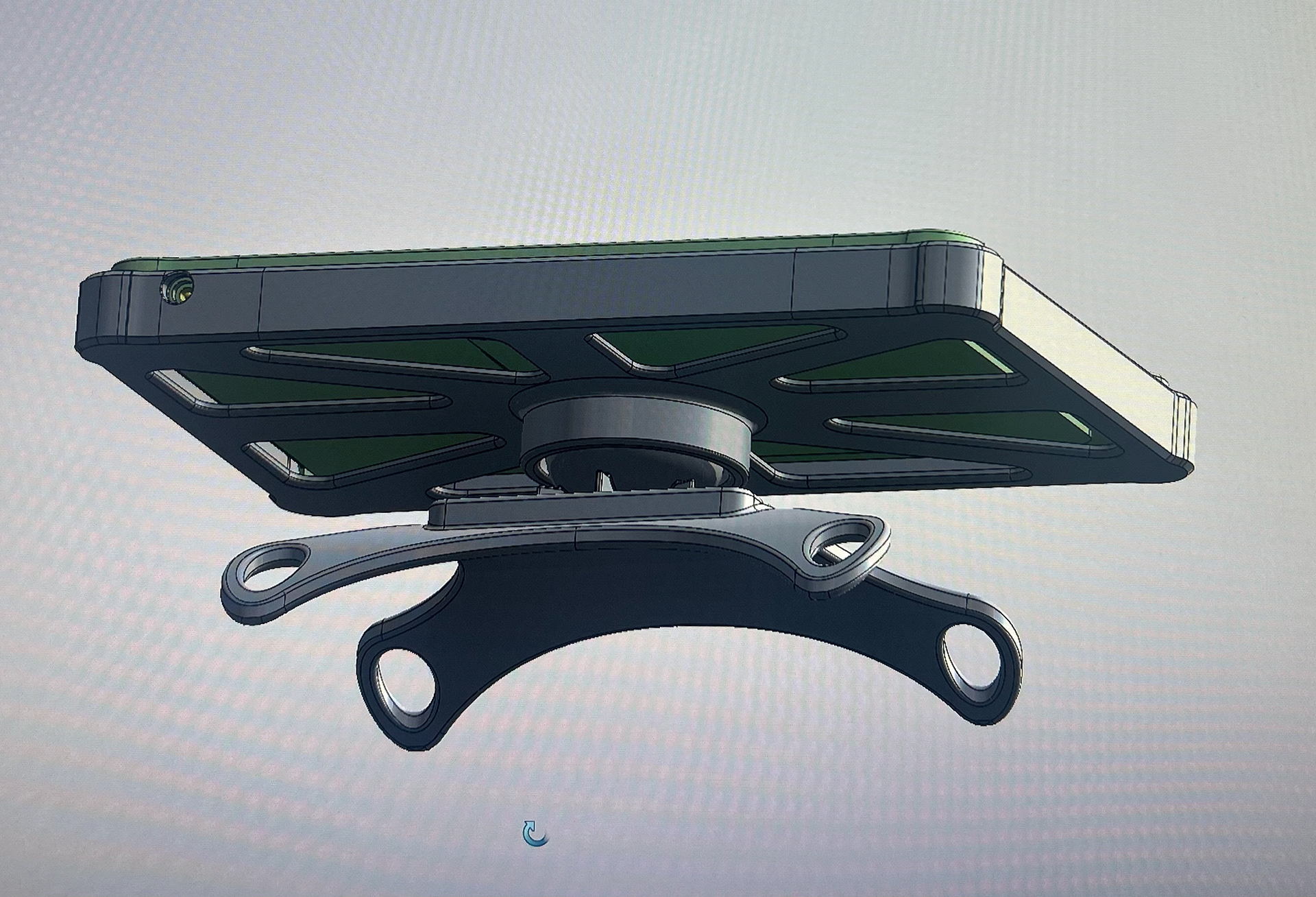
The forearm display was designed as a modular platform using a ball-joint mounting interface that allows the screen angle to be adjusted for different operators and mission requirements.
The wearable configuration keeps mission data accessible while preserving mobility during movement.
Process
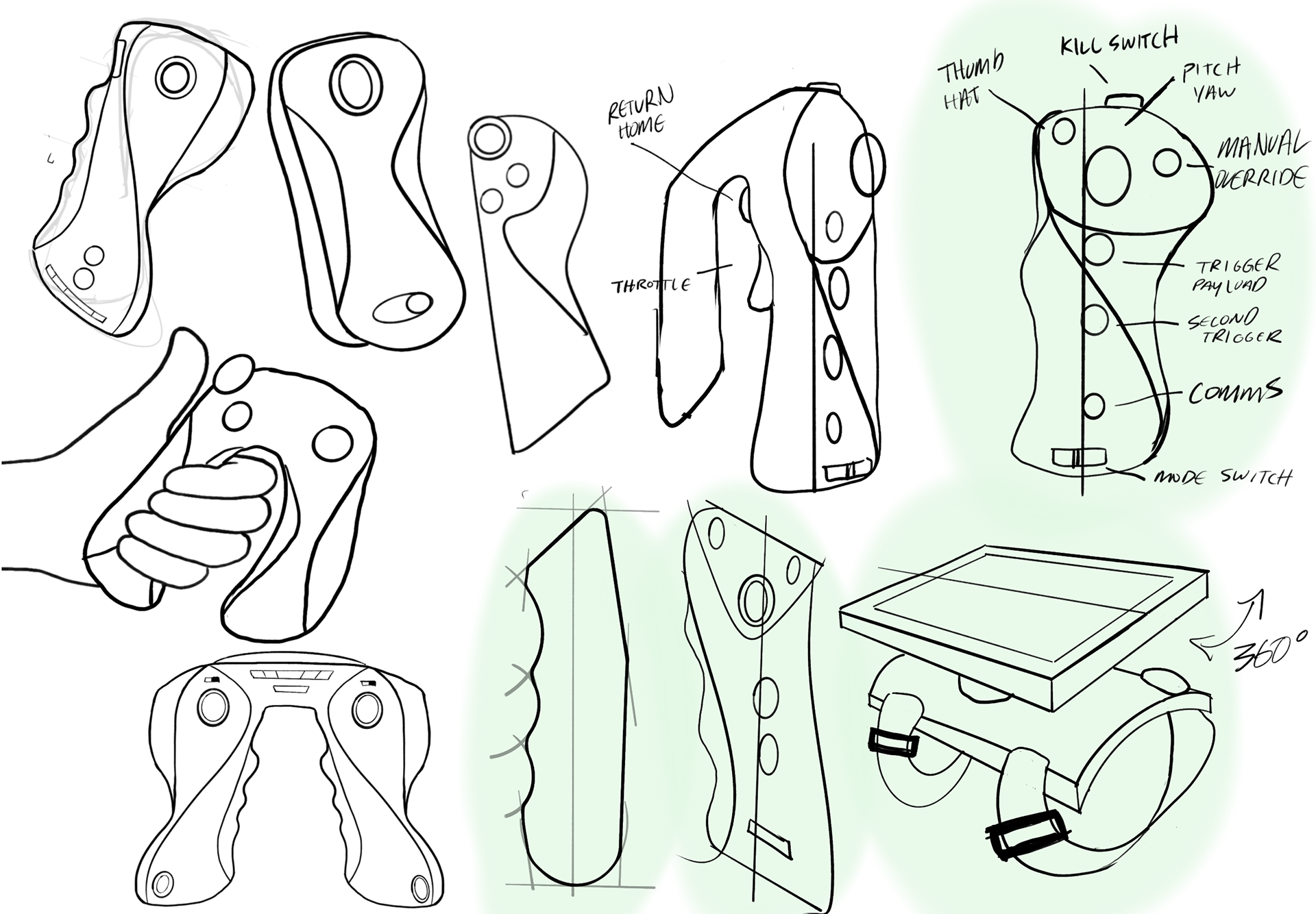
Concept Ideation
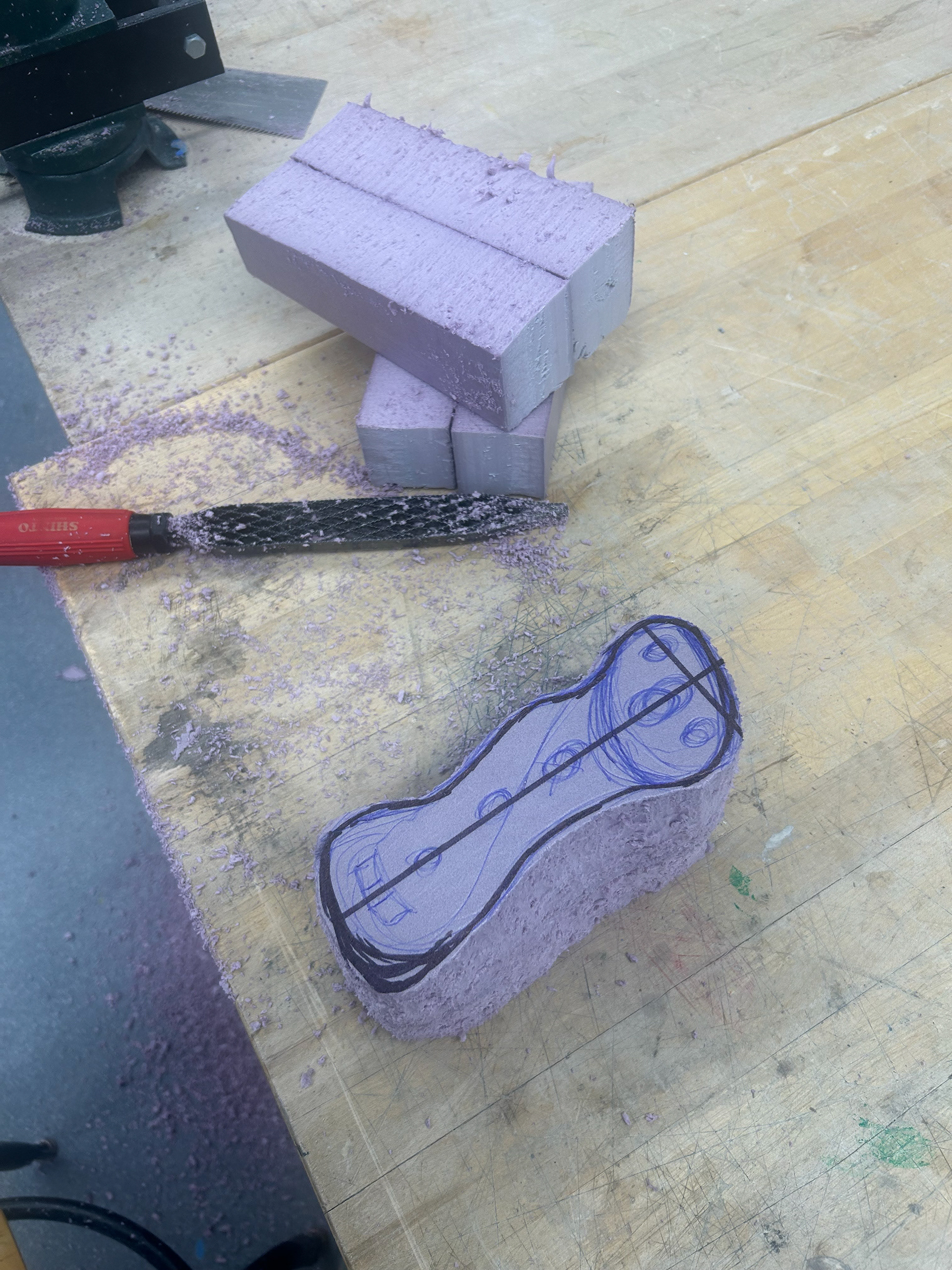
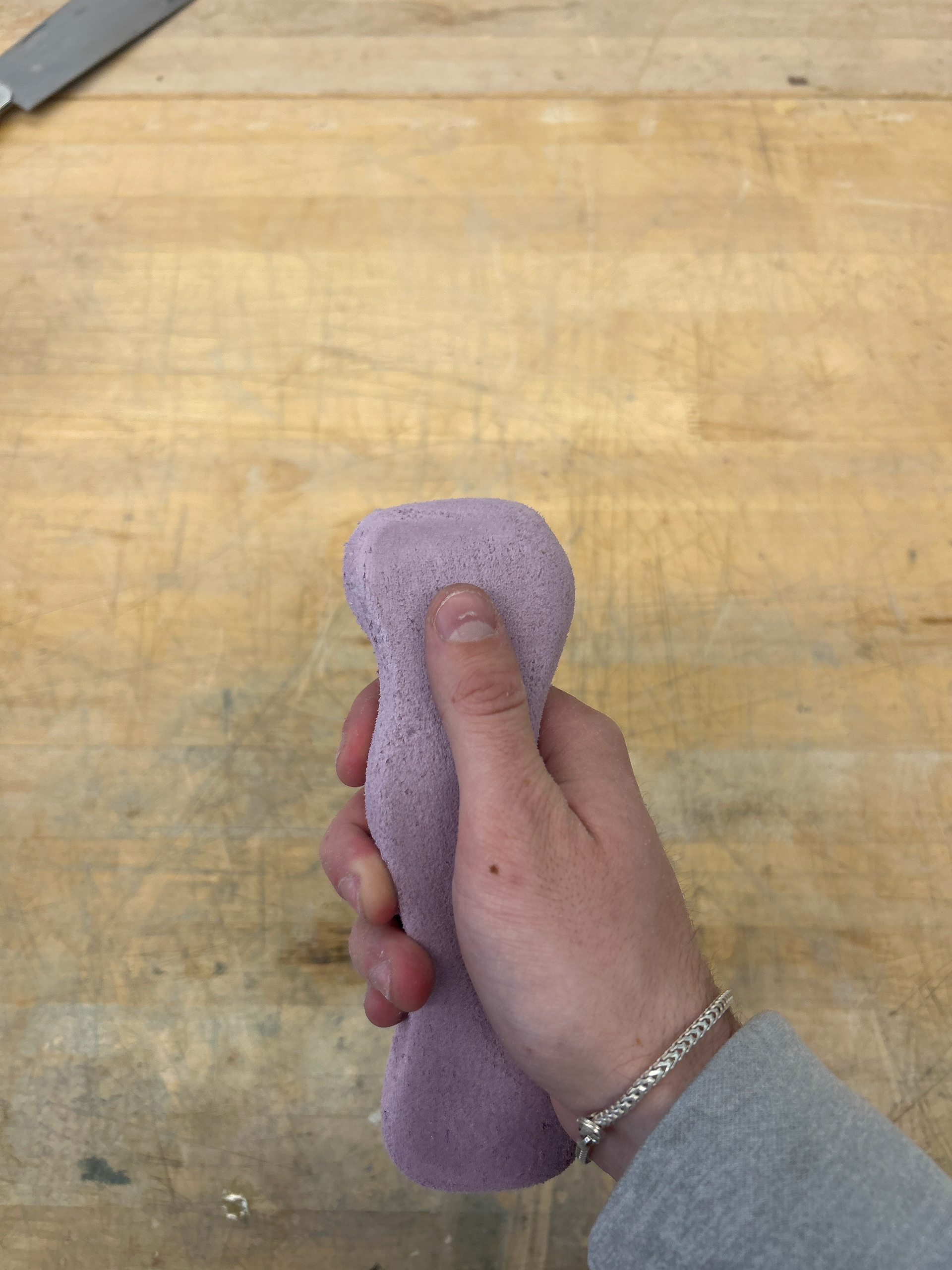
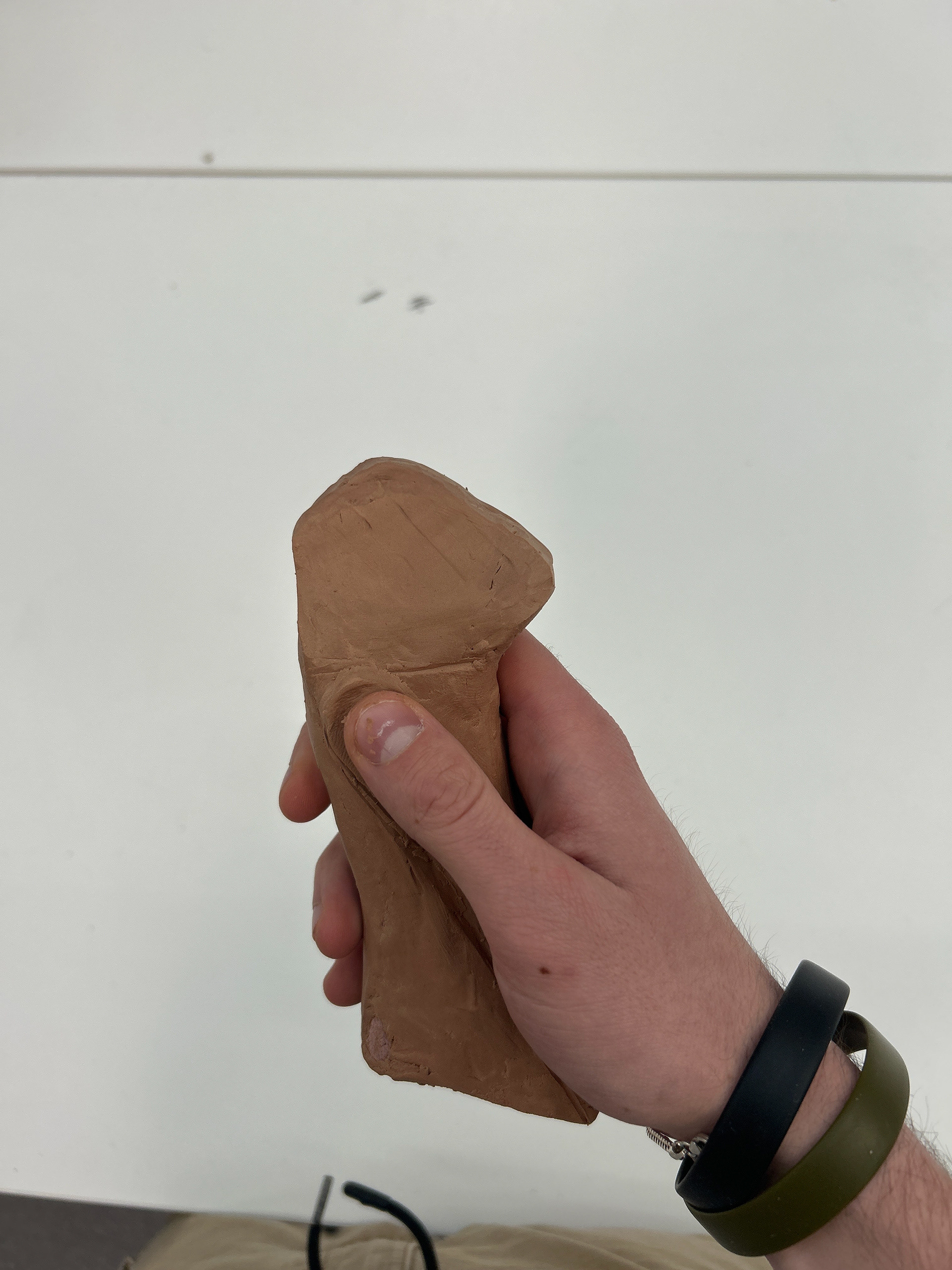
Early Prototypes
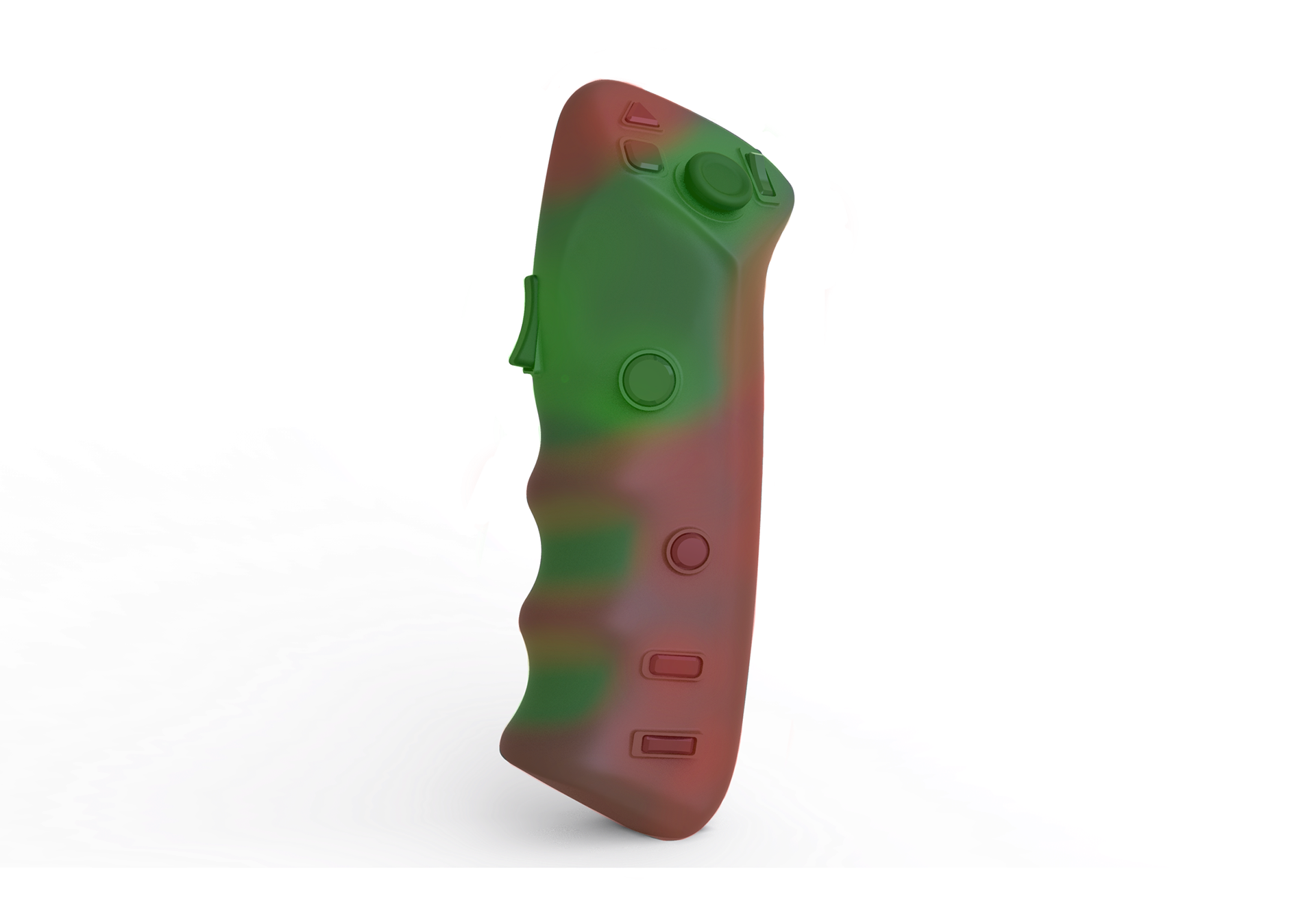
Control Hierarchy & Reach Zones
Control placement was prioritized based on interaction frequency and ergonomic reach.
Primary Reach Zone (Green)
Thumb rest
Thumb joystick (Pitch/Yaw)
Throttle trigger
Payload trigger
Manual override
These controls remain within the operator's natural resting position, minimizing thumb travel and reducing fatigue during repetitive flight tasks.
Intentional Reach Zone (Red)
Return Home
Kill Switch
Mode Selection
Communications
Lower-frequency controls were intentionally positioned outside the primary reach envelope to reduce accidental activation while remaining accessible when needed
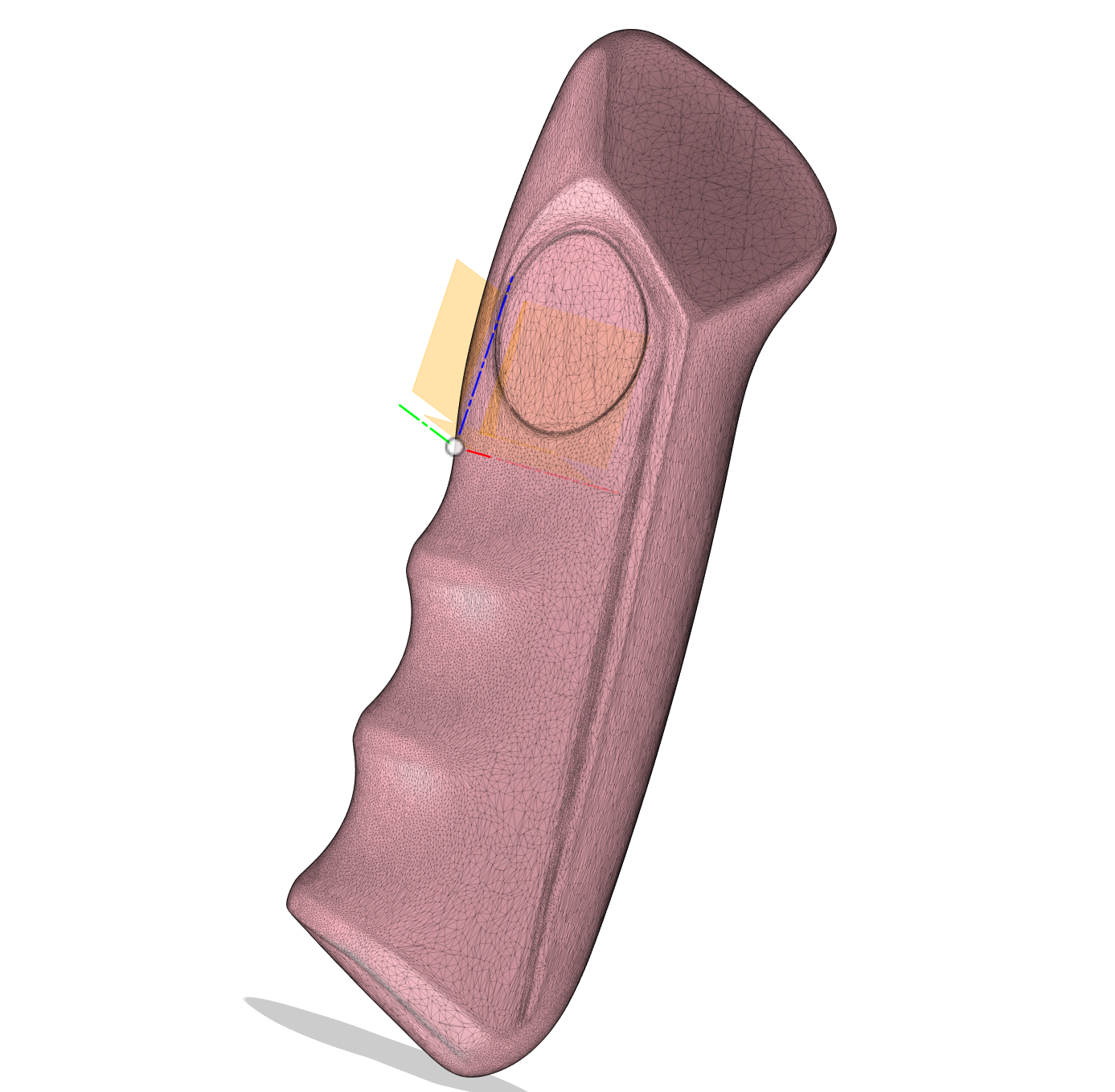
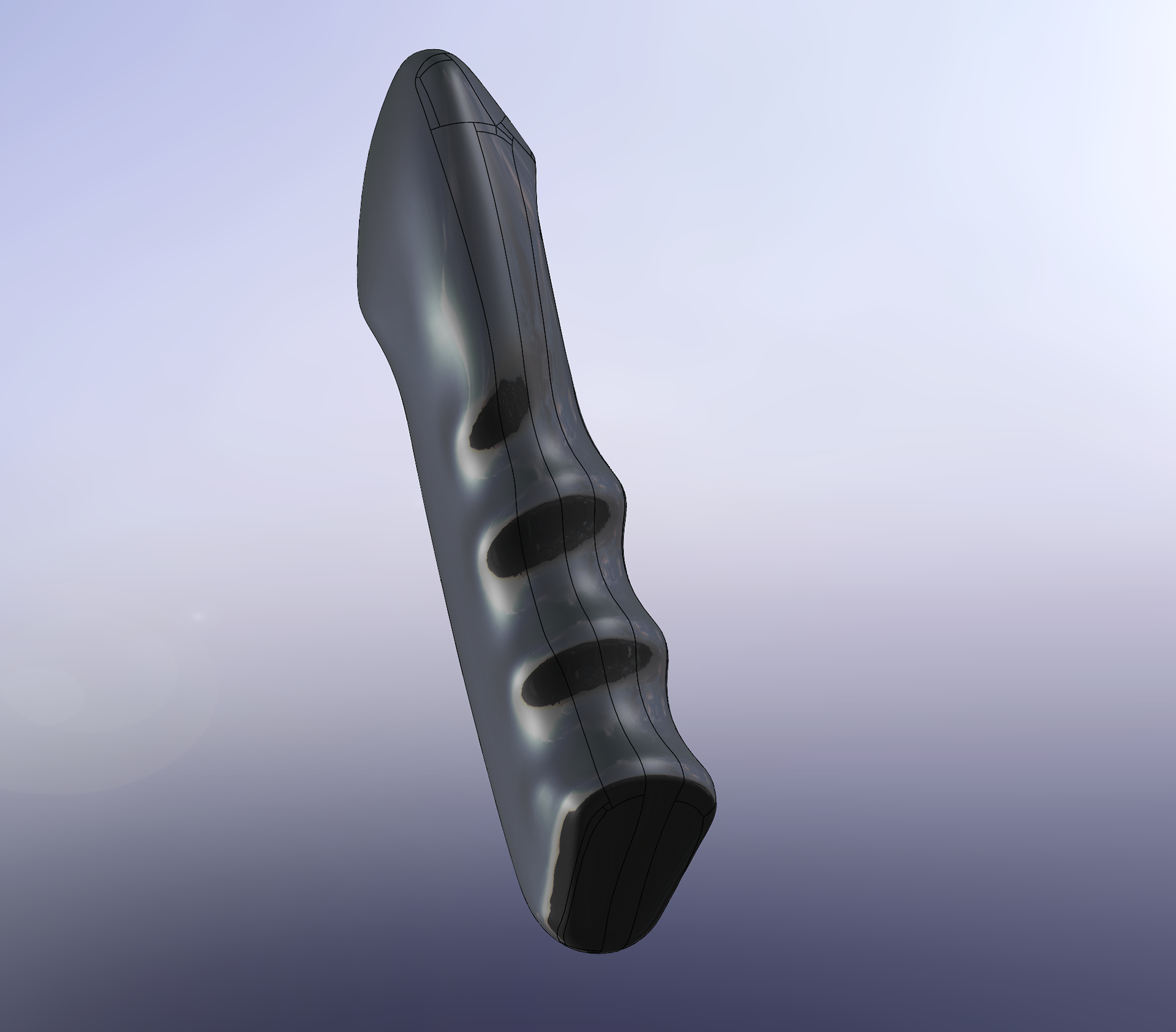
CAD Design
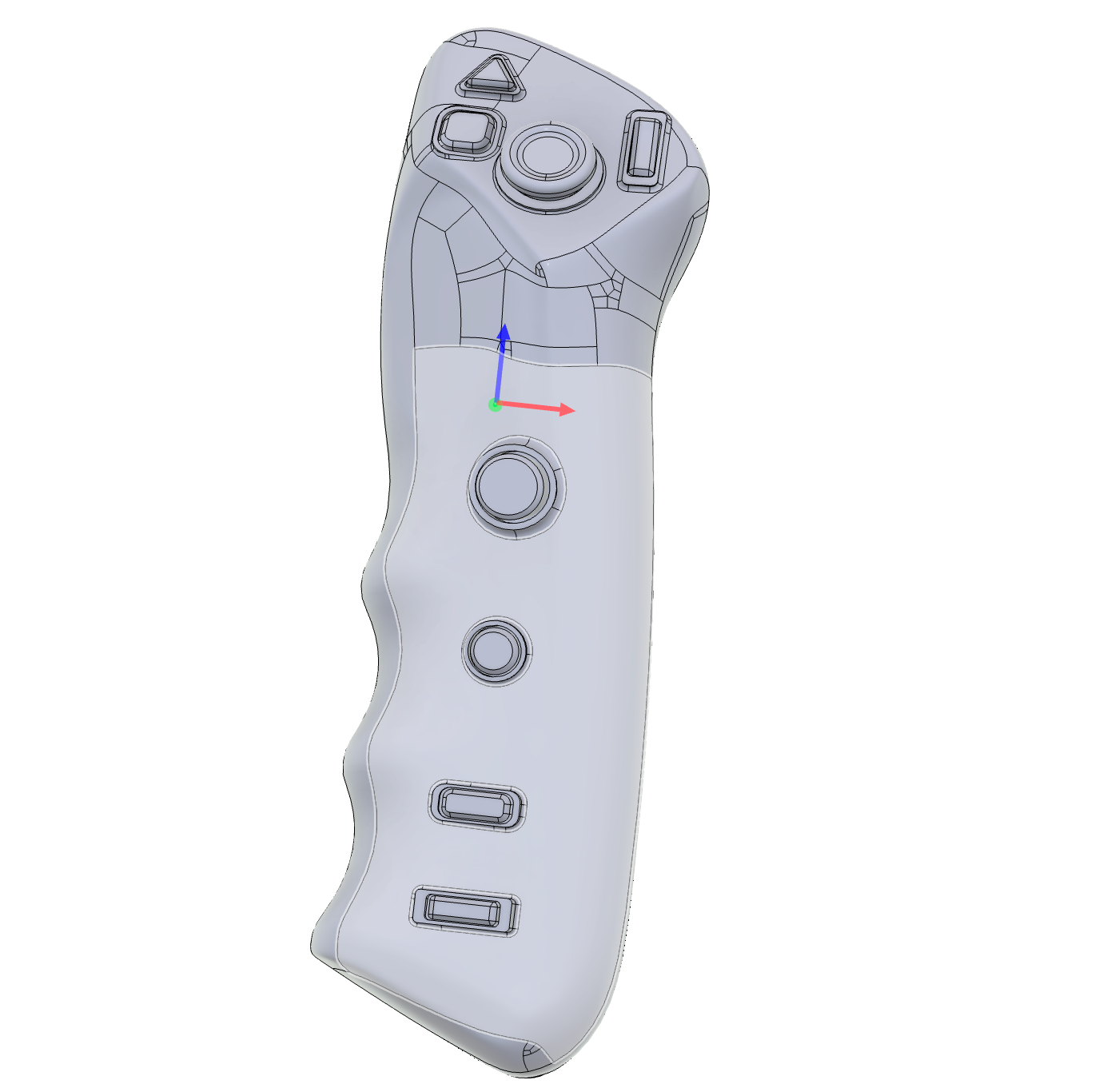
The final design directions integrate a one-handed controller with a wearable forearm display through a modular mounting system.
The controller geometry was refined using anthropometric hand dimensions and optimized for prolonged operation while wearing tactical gloves.
The wearable display keeps navigation, telemetry, and mission information within the operator's field of view without occupying the off-hand.
Iterative Form Development
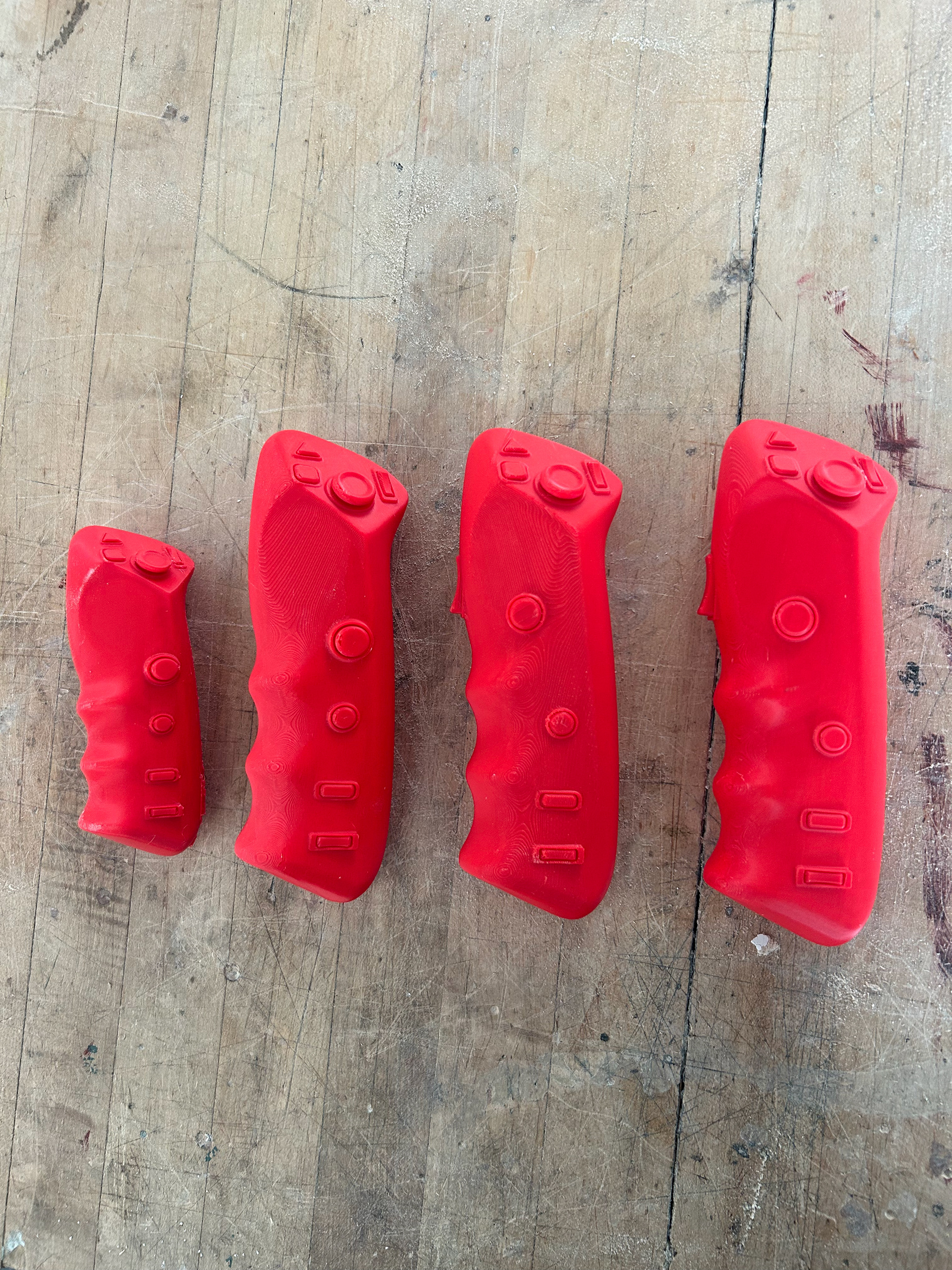
Four full-scale prototypes were produced to refine the overall grip geometry.
(Left to right)
Each iteration adjusted:
Finger groove spacing
Palm support
Thumb posture
Overall grip diameter
Glove compatibility
Reach to primary controls
The final geometry balanced long-term comfort with confident one-handed control.
Human Factors Considerations
• Neutral wrist posture
• Thumb resting position
• Finger groove geometry
• One-handed balance
• Reduced thumb travel
• Anthropometric sizing
• Tactical glove compatibility
• Adjustable forearm display
• Display positioned within natural field of view
• Preserved off-hand mobility